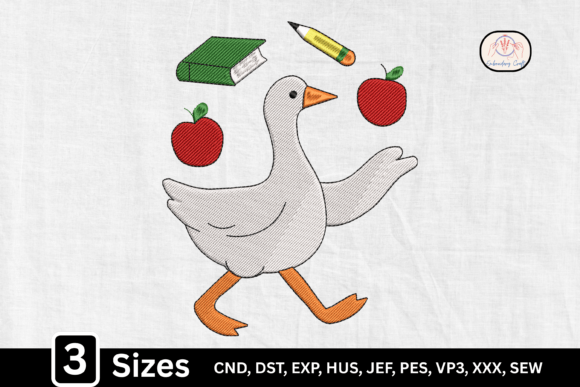
Cute School Teacher Goose: A Designer's Review
As an embroidery digitizer and product reviewer, I approach every new machine embroidery design with a critical eye. It is not enough for a graphic to look charming on a screen; it must translate into physical stitches that hold up to wear, washing, and customer scrutiny. When evaluating the Cute School Teacher Goose design, my primary focus is on how this playful motif performs in real-world production environments. This isn't just about aesthetics; it is about determining if this embroidery file is a reliable asset for your craft business or personal collection.
First Impressions and Visual Personality
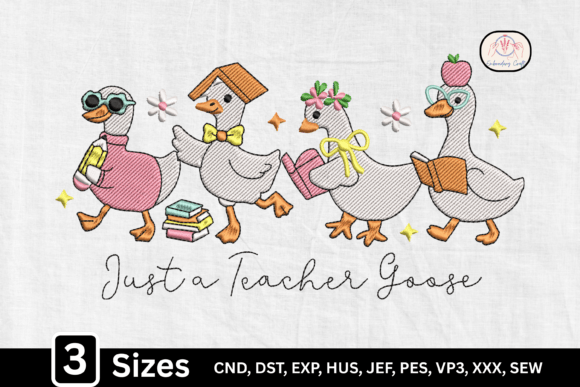
Upon opening the digital file, the immediate impression of the Cute School Teacher Goose is one of whimsical nostalgia. The design captures a specific "teacher life" mood that balances professionalism with approachability. For Etsy sellers and boutique owners, this visual personality is crucial. It avoids being overly juvenile, making it appropriate for adult educators while retaining the charm necessary for baby embroidery or nursery decor. The layout suggests a balanced center of gravity, which is vital when planning placement on garments. Unlike generic clipart converted to stitches, this design appears to have been considered with thread flow in mind, offering a cohesive shape that reads clearly even from a distance.
Real-World Application: The Sweatshirt Test
To truly judge this design, I mentally placed it in a current best-selling scenario: a custom embroidered crewneck sweatshirt for a teacher appreciation gift. In this context, the Cute School Teacher Goose needs to serve as a focal point without overwhelming the garment. If you are creating custom apparel, consider placing this design on the left chest or centered on the yoke. The playful nature of the goose pairs exceptionally well with heather grey or cream fleece, allowing the thread colors to pop against the neutral background.
For those running a small shop product line, this design also translates beautifully to a tote bag design. Canvas totes are a staple for educators, and this motif provides a unique alternative to standard apple or pencil icons. However, because tote bags endure significant friction, I recommend verifying the stitch density before production. You want the design to feel substantial but not so dense that it distorts the canvas or causes needle breaks during high-speed commercial embroidery.
Fabric Considerations and Stabilizer Strategy
No embroidery project exists in a vacuum; the substrate dictates the success of the stitch-out. When using the Cute School Teacher Goose on textured fabrics like terry cloth tea towels or ribbed knits, you must adjust your stabilization strategy. Textured surfaces can swallow fine details, potentially obscuring facial features or small accessories on the goose. I always advise testing on scrap fabric first. For stretchy materials commonly used in sweatshirt embroidery, a cut-away stabilizer is non-negotiable to prevent puckering around the design perimeter.
If you plan to use this as an applique design, pay close attention to the tack-down stitches. The fabric texture of your applique material should complement, not compete with, the base design. Conversely, if stitching directly onto dark fabrics, ensure the digitizer has included adequate underlay. Without proper underlay, dark fabric can show through lighter fill stitch areas, muddying the vibrant school-themed colors. Always check whether the design includes color stops for shading or if it relies solely on solid fills, as this affects both production time and the final tactile quality of the finished product.
Technical Performance and Stitch Integrity
A pretty picture does not guarantee a clean stitch-out. When reviewing the Cute School Teacher Goose, look closely at the transition points between different stitch types. Are there excessive jumps? Does the satin stitch width remain consistent, or does it widen dangerously in curved areas? Wide satin stitches are prone to snagging on zippers or jewelry, which is a major concern for daily-wear items. If you notice wide spans, consider adding a manual split stitch or adjusting the pull compensation in your editing software before committing to a production run.
For makers producing embroidered patches or caps, the scale of this design matters immensely. Caps present a curved sewing field that can distort flat designs. Before hooping a cap, simulate the curve or test on a similar rounded surface. Similarly, if resizing for smaller hoop sizes, verify that internal details remain distinct. Reducing a complex design by more than 20% often results in lost definition. In such cases, this specific Cute School Teacher Goose might be better suited for larger formats like pillow covers or blankets rather than pocket-sized logos.
Commercial Viability and Brand Consistency
For creative entrepreneurs, consistency builds trust. Using the Cute School Teacher Goose across multiple products creates a recognizable brand aesthetic for back-to-school collections. However, you must confirm licensing terms before selling. Does the license cover only physical handmade products, or does it extend to digital embroidery file sales? Never assume. Protecting your business means respecting intellectual property. Additionally, when creating printable mockups for your online listings, ensure the digital representation accurately reflects the stitch texture. Customers appreciate transparency; showing a photo of the actual stitched sample alongside the mockup significantly increases buyer confidence and reduces returns.
This design also holds strong potential for holiday embroidery and seasonal promotions. Its versatility allows it to bridge the gap between general teacher appreciation and specific events like graduation or retirement. By swapping out surrounding elements or changing thread palettes, you can extend the shelf life of this single asset throughout the year, maximizing your return on investment.
Essential Pre-Production Checklist
Before listing any item featuring this design or gifting a personalized gift, run through this practical checklist to ensure professional results:
- Verify Hoop Compatibility: Confirm the design dimensions fit your specific machine’s hoop size with adequate margin for movement.
- Test Stitch Density: Run a sample on your intended fabric to check for stiffness or distortion.
- Check Thread Contrast: View the design in black and white mode to ensure tonal values create necessary separation between elements.
- Inspect Small Details: Zoom in to verify that tiny lettering or facial features are legible and not merely dots.
- Review Color Sequence: Optimize the color order to minimize trims and reduce production time for commercial embroidery runs.
- Confirm Washability: Test launder the sample if the end-use involves frequent washing, such as baby clothes or kitchen linens.
- Audit Licensing: Re-read the terms of use specifically regarding design assets and finished goods sales.
Final Thoughts for Makers
The Cute School Teacher Goose offers a delightful blend of charm and utility for the modern embroiderer. Whether you are crafting a bespoke gift for a favorite educator or building a seasonal inventory for your Etsy shop, success lies in the technical execution. Treat this embroidery file not just as art, but as a manufacturing blueprint. By respecting fabric limitations, optimizing stabilizer choices, and validating stitch integrity through testing, you transform a digital concept into a high-quality, tangible product that customers will cherish. Remember, in the world of machine embroidery, the difference between a hobbyist output and a professional small shop product is almost always found in the preparation and testing phase. Take the time to know this design intimately, and it will reward you with beautiful, durable results.