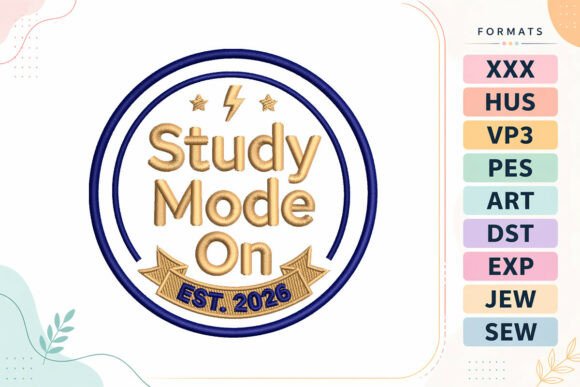
Study Mode On: Back to School Design Review
As a professional embroidery designer specializing in commercial merchandise and branded assets, I approach every new machine embroidery design with a critical eye toward production viability and marketability. When evaluating the "Study Mode On" concept for the upcoming Back to School season, my primary focus is not just on aesthetic appeal, but on how this digital asset translates into profitable small business merch. This review dissects the design’s potential for apparel decorators, Etsy sellers, and local businesses looking to capitalize on academic trends through high-quality custom apparel and accessories.
Visual Personality and Commercial First Impressions
The first impression of "Study Mode On" suggests a modern academic badge style that bridges the gap between playful nostalgia and contemporary streetwear. For a business owner, this visual personality is crucial. It does not read as childish clip art; rather, it presents as a structured, intentional graphic suitable for a wide demographic ranging from university students to adult learners and educators. The badge format inherently implies authority and completion, which psychologically resonates with buyers seeking validation or belonging.
From a branding perspective, this design feels friendly yet organized. It avoids the chaotic energy often associated with school-themed graphics, opting instead for a clean silhouette that communicates focus and readiness. For handmade brands and creative studios, this aesthetic aligns well with current trends in stationery, coffee culture, and cozy academia. As an embroidery file, its success will depend heavily on maintaining this balance during digitization. If the lettering is too thin or the badge border too complex, the professional feel collapses. However, if executed correctly, it serves as a versatile anchor for seasonal collections that need to look premium rather than costumey.
Real-World Applications for Small Business Merchandise
Beyond traditional student gear, "Study Mode On" offers surprising utility for diverse small business niches. I have evaluated this design across several commercial applications where it can drive engagement and sales.
- Cafés and Bookstores: This design is ideal for staff uniforms or customer loyalty merchandise. An apron embroidery placement featuring this badge creates an immersive atmosphere for customers studying or working remotely. It signals that the establishment supports productivity and learning.
- Tutoring Centers and Educational Coaches: For service-based businesses, this design functions as excellent event merch or welcome kit branding. Applied as an embroidered patch on tote bags or caps, it reinforces brand identity while providing practical value to clients.
- Etsy Sellers and POD Shops: The "badge" aesthetic is highly collectible. Digital embroidery file buyers can use this as a base for customizable listings, allowing customers to add names or graduation years. It works exceptionally well as a tote bag design for the back-to-school rush, offering a higher perceived value than screen printing due to the texture of thread.
- Creative Studios and Makers: For businesses selling planners, journals, or desk accessories, this design serves as a perfect packaging accent or product label. Stitched onto canvas pouches or pencil cases, it elevates a simple handmade product into a branded experience.
Production Constraints and Technical Considerations
While the concept is strong, technical execution determines profitability. In commercial embroidery, time is money, and re-hoops are profit killers. When reviewing "Study Mode On" for production, specific constraints must be respected to ensure the finished product meets quality standards.
Cap Embroidery and Curved Surfaces
The badge style is naturally suited for cap embroidery, but caution is required. Caps present a curved, unstable surface. If the "Study Mode On" design features dense fill stitches or rigid outlines, it may cause fabric distortion or needle breaks. Always verify that the digitizer has accounted for cap-specific compensation. If you are adapting this design yourself, consider reducing stitch density in the center and ensuring adequate spacing between text elements to prevent puckering on structured headwear.
Small Patch Sizes and Text Legibility
Badges are frequently requested as 2-inch or 3-inch patches. At this scale, tiny lettering is the enemy. Before committing to bulk production, test the embroidery file at the smallest intended size. Serif fonts or script details that look elegant on screen often turn into unreadable thread blobs when stitched at miniature scales. You may need to simplify the design assets or increase column widths specifically for patch production. Never assume a standard garment file will perform adequately as a micro-patch without modification.
Fabric Texture and Stabilizer Selection
This design is marketed as great for backpacks, which typically involve heavy canvas, nylon, or polyester. These materials require robust stabilization. A tear-away stabilizer alone is rarely sufficient for badge designs on backpack material; a cut-away or fusible mesh is often necessary to support the stitch density and prevent the design from sinking into the fabric texture. Conversely, if applying this to lightweight summer tees or linen aprons, excessive density will create a bulletproof vest effect. Always match your stabilizer choice to both the design complexity and the substrate weight.
Impact on Brand Identity and Customer Trust
In the competitive landscape of Back to School merchandise, professionalism distinguishes established brands from hobbyists. Using a well-digitized version of "Study Mode On" signals attention to detail. Clean registration, appropriate thread tension, and thoughtful placement contribute to customer trust. When a buyer sees crisp edges and legible text on an embroidered patch or chest logo, they subconsciously attribute that quality to the entire brand.
Furthermore, consistency builds recognition. If you use this design across multiple touchpoints—staff shirts, social media photos, packaging inserts, and retail displays—it creates a cohesive visual language. This consistency increases the perceived value of your offerings. Customers are willing to pay more for custom apparel that looks like part of a deliberate collection rather than a random assortment of graphics. The "Study Mode" theme also taps into an emotional state of preparation and ambition, making the purchase feel purposeful rather than frivolous.
Essential Designer Notes for Pre-Production
Before running a full production batch or listing this item in your shop, adhere to these professional verification steps to minimize risk and maximize quality.
- Verify Licensing: Confirm that the digital embroidery file includes commercial licensing rights for physical products. Do not assume personal-use files can be sold on finished goods.
- Check Hoop Size Compatibility: Ensure the design dimensions fit within your machine’s maximum embroidery area with adequate margin for the hoop frame. Measure the actual stitch-out, not just the software preview.
- Test Thread Color Contrast: Academic badges often rely on high contrast for readability. Test thread colors against your specific garment blanks. Navy thread on black fabric may disappear in photos even if visible in person; adjust for both real-life viewing and digital marketing.
- Create a Printable Mockup: Before stitching, generate a realistic mockup to check proportions relative to the garment. This helps avoid placing a large badge too low on a chest or too high on a cap brim.
- Inspect Spacing and Kerning: Zoom in to 400% in your editing software to check for overlapping stitches or gaps in satin columns. Fix these digitally before wasting thread and stabilizer.
- Wash Test for Durability: Since this targets school items that face frequent laundering, wash and dry a sample to check for shrinkage or thread fraying. Adjust density or underlay if the design distorts after cleaning.
- Compare Beside Other Assets: Place this design next to your existing logo or other seasonal graphics to ensure stylistic harmony. Visual consistency strengthens your overall brand presentation.
"Study Mode On" represents a significant opportunity for embroidery businesses to capture the Back to School market with a product that feels fresh and relevant. By treating this machine embroidery design as a serious commercial asset rather than just a decorative element, and by rigorously testing its performance across various substrates and sizes, small business owners can create merchandise that resonates deeply with their audience. Success lies in the details: proper stabilization, legible typography, and strategic application. Validate your files, respect the medium, and let the quality of your craftsmanship elevate this trendy concept into a staple of your seasonal catalog.