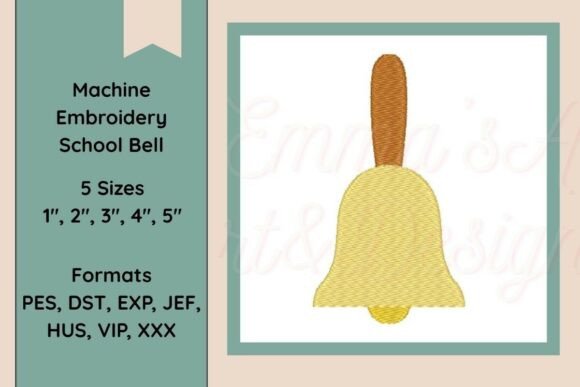
Machine Embroidery School Bell: A Designer’s Review
As a professional embroidery digitizer and product reviewer, I approach every new design with a critical eye. It is not enough for a graphic to look appealing on a screen; it must translate into clean, durable stitches that add value to a finished product. When evaluating the Machine Embroidery School Bell design, my primary focus is on its utility for real-world projects rather than just its aesthetic charm. This design presents itself as a clean, simple motif intended for classroom teacher projects, but its potential extends far beyond basic educational decor. For Etsy sellers, apparel decorators, and makers preparing for the Back To School rush, understanding how this specific embroidery file behaves under the needle is essential for creating high-quality merchandise.
First Impressions and Visual Personality
Upon opening the digital embroidery file, the first thing that stands out is the deliberate simplicity of the artwork. In an industry often saturated with overly complex, stitch-heavy designs, this school bell offers a refreshing clarity. The lines are distinct, suggesting a balance between satin stitch outlines and efficient fill stitch areas. This visual restraint is actually a major asset for commercial embroidery. A design that is too dense can cause fabric puckering or distortion, especially on lighter garments. The Machine Embroidery School Bell appears optimized for versatility, striking a mood that is nostalgic yet crisp enough for modern handmade products.
The shape itself is iconic and instantly recognizable even at smaller sizes. This is crucial for creators making embroidered patches or left-chest logos where detail can easily get lost. The layout feels centered and balanced, which reduces the risk of registration issues during stitching. For a designer, seeing a well-proportioned bell shape means less time spent editing jump stitches or worrying about thread breaks in tight corners. It feels like a design created by someone who understands the mechanics of the machine, not just the art of illustration.
Real-World Application: The Teacher Tote Bag Test
To truly evaluate this design, I mentally placed it in a specific production scenario: creating custom canvas tote bags for a local school district’s staff appreciation event. Canvas is a textured, unforgiving fabric that demands a stable design. If the stitch density is too low, the fabric grain shows through; if it is too high, the bag becomes stiff and unappealing.
In this context, the Machine Embroidery School Bell performs exceptionally well. Its solid structure provides enough coverage to stand out against the natural canvas texture without requiring excessive layers of stabilizer. I envision pairing this bell with a personalized name in a complementary font below it. Because the bell design is self-contained and visually weighted correctly, it anchors the composition effectively. For a craft business owner, this means you can offer personalization services without having to re-digitize the entire layout for every customer. The design acts as a reliable constant while the variable text changes, streamlining production for bulk orders.
Furthermore, consider the marketability of such a tote bag design. Teachers appreciate functional, professional-looking gear over cutesy caricatures. This bell strikes that professional tone. It elevates the perceived value of the item from a generic giveaway to a thoughtful, boutique-style gift. When listing similar items in an Etsy shop, photos of this clean design on a structured bag will likely convert better than cluttered alternatives because the buyer can immediately visualize the quality of the finished product.
Performance Across Different Substrates
Versatility is the hallmark of a profitable embroidery project. While the tote bag scenario works beautifully, this design must also perform on apparel. On sweatshirt embroidery, particularly on fleece or French terry, the design needs to cut through the pile. The Machine Embroidery School Bell seems robust enough for this, provided you use a water-soluble topping to prevent stitches from sinking into the fabric nap. The simplicity of the shape allows for smooth satin stitch borders that define the edge clearly against fuzzy backgrounds.
However, caution is required when applying this to baby embroidery or lightweight knits. While the design is described as clean and simple, any school bell inherently contains curves and potentially dense connection points. On stretchy onesies or thin cotton tees, you must verify the stitch density before committing to production. If the center of the bell uses a heavy fill stitch, it could create a bulletproof patch effect that is uncomfortable for infant wear. In these cases, testing on scrap fabric is non-negotiable. You may need to adjust the underlay or reduce the density slightly to maintain the garment's drape.
For those creating holiday embroidery or seasonal decor, this design transitions surprisingly well. Stitched in metallic gold or deep red thread on a velvet pillow cover or linen tea towel, it evokes traditional holiday nostalgia. The classic silhouette avoids looking strictly academic, allowing it to double as festive winter decor. This dual-purpose nature makes it a valuable asset for small shop products that need to remain relevant across multiple selling seasons.
Critical Considerations for Makers and Sellers
Despite its strengths, there are specific environments where the Machine Embroidery School Bell requires careful handling. Curved surfaces like caps present a challenge. The vertical height of a bell can sometimes exceed the usable area of a standard cap frame, or the curvature can distort the circular geometry of the bell. Always measure your hoop size and cap frame limits before attempting this placement. Similarly, on dark fabrics, ensure your thread colors provide sufficient contrast. A navy blue bell on a black shirt will disappear in product photography and in person. Use light or metallic thread colors to maintain visual impact.
Licensing and commercial rights are another vital checkpoint. Before selling finished products or using the design in printable mockups for digital sales, confirm the specific license terms included with the embroidery file. Just because a design is available for purchase does not automatically grant unlimited commercial reproduction rights. Protecting your craft business involves respecting intellectual property and ensuring your usage aligns with the designer’s permissions. This professionalism builds trust with customers and peers alike.
Designer Notes for Optimal Results
To get the most out of this machine embroidery design, adhere to these practical guidelines derived from professional experience:
- Test Stitch First: Never run a new design directly on a final product. Stitch it out on a scrap of the exact fabric and stabilizer combination you intend to use. Check for gaps, puckering, or registration errors.
- Stabilizer Selection: Match the stabilizer to the fabric weight. Use cut-away for stretchy apparel to prevent distortion over time, and tear-away for stable woven fabrics like canvas or denim.
- Thread Color Strategy: Test color combinations in natural lighting. What looks good on a monitor may lack contrast in reality. Create physical thread charts for your best-selling colorways.
- Mockup Accuracy: When creating digital product previews, use realistic textures. A flat vector overlay does not represent true embroidery. Show the stitch direction and sheen to manage customer expectations.
- Detail Inspection: Zoom in on the smallest elements of the design file. Ensure that any internal details are wide enough to stitch cleanly without causing needle breaks or thread bunching.
- Wash Testing: If producing items for frequent washing like aprons or baby clothes, wash and dry your test sample. Verify that the design holds up without fraying or pulling away from the fabric.
The Machine Embroidery School Bell is more than just a seasonal graphic; it is a functional tool for creators who value clean aesthetics and production efficiency. Whether you are outfitting a classroom, stocking an Etsy shop with Back To School gear, or adding a vintage touch to holiday linens, this design offers a solid foundation for success. By approaching it with technical mindfulness and creative intention, you can transform a simple digital file into a cherished handmade product that resonates with buyers and withstands the test of daily use.